
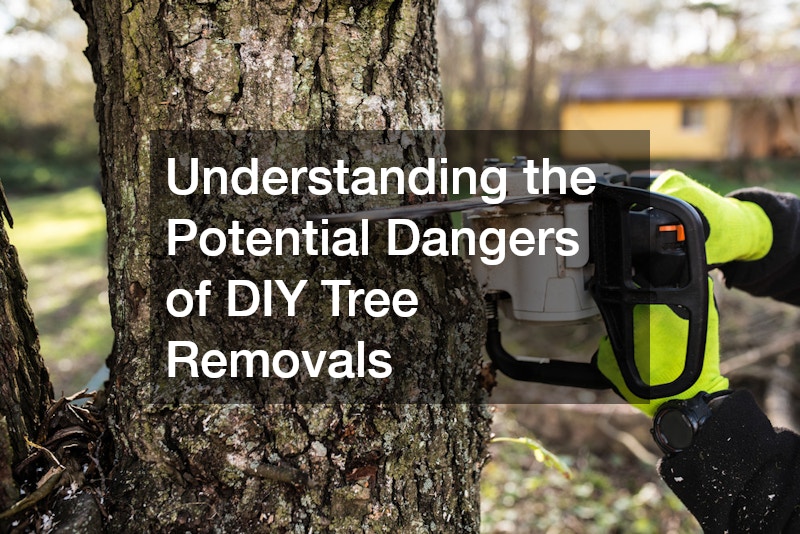
Trees add structure, shade, and value to a property, but they can also become hazards when they are damaged, diseased, or poorly positioned. In these situations, homeowners sometimes consider handling the work themselves to save time or money. While the idea may seem straightforward, DIY approaches to removing large trees introduce risks that are often underestimated. What appears to be a manageable outdoor project can quickly escalate into a situation involving personal injury, property damage, or long-term environmental consequences.
Understanding the realities behind tree removals is essential before attempting any work without professional support. The process requires more than cutting branches; it demands technical knowledge, specialized equipment, and an awareness of structural behavior that most homeowners do not regularly encounter.
The Physical Risks Behind DIY Tree Removal
One of the most immediate dangers of attempting tree removal without professional assistance is the physical risk to the individual performing the work. Trees are heavy, unpredictable structures that do not always fall in a controlled direction. Even small miscalculations in cutting angles or weight distribution can result in sudden shifts that lead to serious injuries.
Ladders and elevated cutting positions further increase the danger. Working at height while managing chainsaws or hand tools reduces stability and reaction time. A simple slip or unexpected branch movement can lead to falls or contact with sharp equipment. Unlike many home improvement tasks, there is little margin for error when dealing with large, rigid structures under tension.
Weather conditions can also complicate the process. Wind, moisture, and uneven terrain all affect how a tree responds during cutting. These variables are often overlooked by inexperienced individuals, but they play a significant role in safety outcomes. Even a light breeze can alter the trajectory of a falling trunk or limb.
Equipment, Environment, and Structural Hazards
The second layer of risk in DIY tree removals involves equipment and environmental interaction. Professional-grade tools such as chainsaws, stump grinders, and rigging systems are designed for precision and control. When used without proper training, these tools can become extremely dangerous. Kickback from a chainsaw, for example, can occur suddenly and with enough force to cause severe injury.
Beyond tools, the surrounding environment plays a major role in safety. Trees are often located near power lines, fences, homes, or other structures. Misjudging the fall path of a trunk or large branch can result in costly and hazardous damage. Electrical hazards are particularly concerning, as contact with overhead lines can have life-threatening consequences.
The internal structure of a tree also presents hidden challenges. Decay, hollow sections, or unstable root systems are not always visible from the outside. Cutting into a compromised tree without understanding its internal condition can cause unexpected collapse patterns. This unpredictability makes controlled removal significantly more complex than it may seem.
Why Professional Expertise Matters for Safe Outcomes
Professional arborists bring a level of technical understanding that significantly reduces the risks associated with complex removals. They are trained to assess tree stability, identify structural weaknesses, and determine the safest sequence of cuts. This planning process is critical for ensuring that the tree comes down in a controlled and predictable manner.
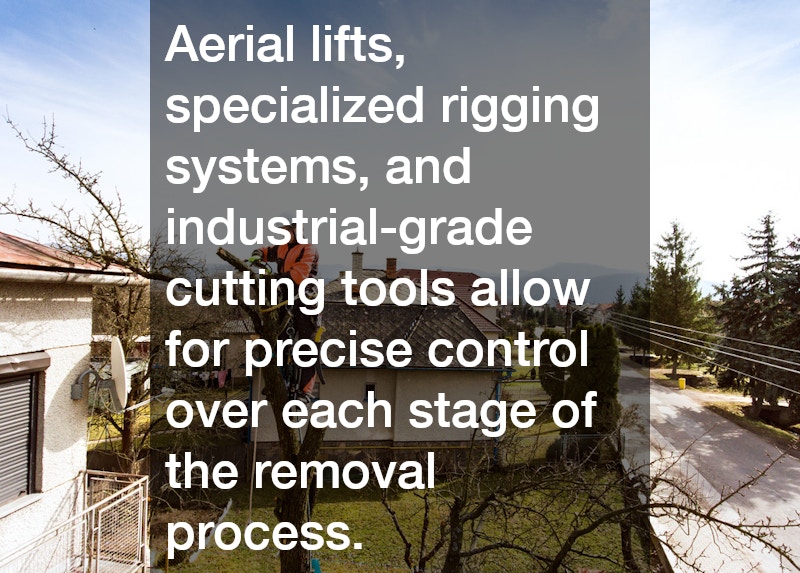
In many cases, professionals also have access to advanced equipment that improves both safety and efficiency. Aerial lifts, specialized rigging systems, and industrial-grade cutting tools allow for precise control over each stage of the removal process. These resources are not typically available to homeowners, which limits the ability to manage complex scenarios safely.
Experience also plays a major role in decision-making. Skilled arborists can anticipate how different species behave under stress, how environmental conditions will influence movement, and how to minimize impact on surrounding structures. This level of foresight is difficult to replicate without years of hands-on practice.
Tree maintenance and removal require a careful balance of knowledge, skill, and equipment that goes far beyond basic home improvement work. The risks associated with DIY attempts are not limited to minor mishaps; they can involve serious injury, structural damage, and unpredictable environmental hazards. Recognizing the complexity behind tree removals helps homeowners make more informed decisions about when to take action and when to rely on professional expertise. In most cases, prioritizing safety and precision leads to better long-term outcomes for both property and personal well-being.