
Termites cause billions of dollars in structural damage each year, often working unnoticed until repairs become extensive and costly. Because infestations typically begin behind walls, beneath flooring, or underground, early detection is critical. Recognizing the warning signs allows homeowners to act quickly and pursue professional termite control before damage escalates.
This article explains the most common indicators of termite activity, outlines prevention strategies, and clarifies what steps to take if termites are discovered.
What Are the Most Common Signs of Termite Infestation?
Understanding what to look for is the first line of defense against structural damage. Termites leave distinct evidence of their presence even when they remain hidden.
Mud tubes are one of the clearest signs of subterranean termite activity. These narrow tunnels, often about the width of a pencil, are typically found along foundation walls, crawl spaces, support beams, or basement surfaces. Termites construct these tubes using soil, saliva, and wood particles to create protected pathways between their underground colony and a food source. If a mud tube is opened and live termites are visible inside, the infestation is active.
Termite droppings, also known as frass, are commonly associated with drywood termites. These droppings resemble tiny, uniform pellets that are similar in appearance to grains of sand or sawdust. They often accumulate on windowsills, near baseboards, or beneath infested wood. Unlike regular sawdust, termite frass is consistent in size and may form small, noticeable piles. The presence of mud tubes or frass indicates nearby feeding activity and signals the need for professional termite control.
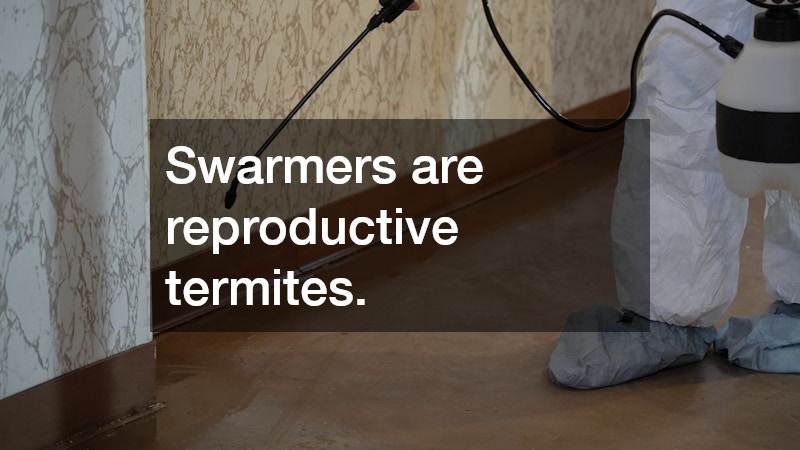
Swarmers are reproductive termites that leave an established colony to create new colonies. They typically emerge in large numbers during warm and humid conditions, most often in spring or early summer. Homeowners frequently mistake swarmers for flying ants, but termite swarmers have straight antennae, broad waists, and wings that are equal in size.
After swarming, termites shed their wings. Finding piles of discarded wings near windowsills, doorways, or light fixtures strongly suggests an active colony within or near the home. If swarmers appear indoors, it usually indicates that termites have already established themselves inside the structure.
Termites consume wood from the inside out, leaving a thin outer layer intact. When affected wood is tapped, it may produce a hollow sound. Floors may feel soft or spongy, and doors or windows may become difficult to open due to subtle structural distortion.
Blistering or bubbling paint on wooden surfaces can also signal termite damage. Although these signs are sometimes confused with water damage, termite galleries create irregular internal channels that weaken the material. Any indication of compromised structural wood should prompt immediate evaluation and termite control intervention.
How Can Homeowners Prevent Termite Infestation?
Prevention focuses on reducing conditions that attract termites and limiting access to food and moisture sources.
Termites thrive in damp environments, so controlling moisture is essential. Homeowners should repair leaking pipes, faucets, and air conditioning units promptly. Crawl spaces should be properly ventilated to reduce humidity levels. Gutters and downspouts must be maintained so that water flows away from the foundation rather than pooling around it.
Standing water and excess moisture near the home’s foundation create ideal conditions for subterranean termites. Consistent maintenance significantly reduces the likelihood of infestation.
Preventive wood treatments involve applying approved termiticides to exposed lumber in high-risk areas such as basements and crawl spaces. During construction or renovation, pressure-treated wood offers additional resistance to termite damage.
Soil treatments create a chemical barrier between the ground and the structure’s foundation. Licensed professionals apply liquid termiticides around the perimeter of the home to establish long-term protection. This method remains a foundational component of comprehensive termite control programs. Homeowners should also avoid storing firewood directly against exterior walls and should remove wood debris from the yard to minimize attractants.
Annual inspections are one of the most effective preventive measures. Even when no visible signs are present, trained technicians can identify subtle indicators such as early mud tube formation or moisture conditions that increase risk. Professional termite control providers have the tools and experience to assess vulnerabilities and recommend targeted solutions. Scheduled inspections are especially important in regions where termite activity is common.
What Steps Should Be Taken If Termites Are Found?
Discovering termites can be concerning, but prompt action can limit structural damage and long-term expense.
If signs of termites are identified, homeowners should avoid disturbing the affected area unnecessarily. Spraying over-the-counter insecticides directly into mud tubes is not recommended because it may eliminate visible termites without destroying the colony. In some cases, improper treatment can cause termites to relocate and expand their activity within the structure. Limiting movement of potentially infested wood can help reduce spread until a professional assessment is completed.
A licensed pest management professional should conduct a comprehensive inspection to determine the extent of the infestation. Treatment options vary depending on the species and severity of the problem. Solutions may include liquid soil treatments, baiting systems that eliminate the colony over time, localized wood treatments, or structural fumigation in severe cases.
A customized termite control plan addresses both the active colony and preventive safeguards to reduce the risk of recurrence. Professional intervention ensures that treatment methods are applied safely and effectively.
After treatment, continued monitoring is essential. Many termite control programs include follow-up inspections and service agreements to maintain protection. Homeowners should continue managing moisture, eliminating wood-to-soil contact, and maintaining the home’s exterior.
Ongoing vigilance helps ensure early detection if activity returns and supports a long-term termite-free environment.
Termites often remain hidden until damage becomes substantial. Mud tubes, frass, swarmers, discarded wings, and hollow-sounding wood are clear warning signs that require attention. By understanding these indicators and implementing preventive measures such as moisture control, soil treatments, and routine inspections, homeowners can significantly reduce risk.
If termites are discovered, professional termite control offers the most reliable path to elimination and long-term protection. Proactive detection and consistent maintenance remain the most effective strategies for preserving a home’s structural integrity and value.